FC 27’s New Bundesliga Competition Raises the Stakes
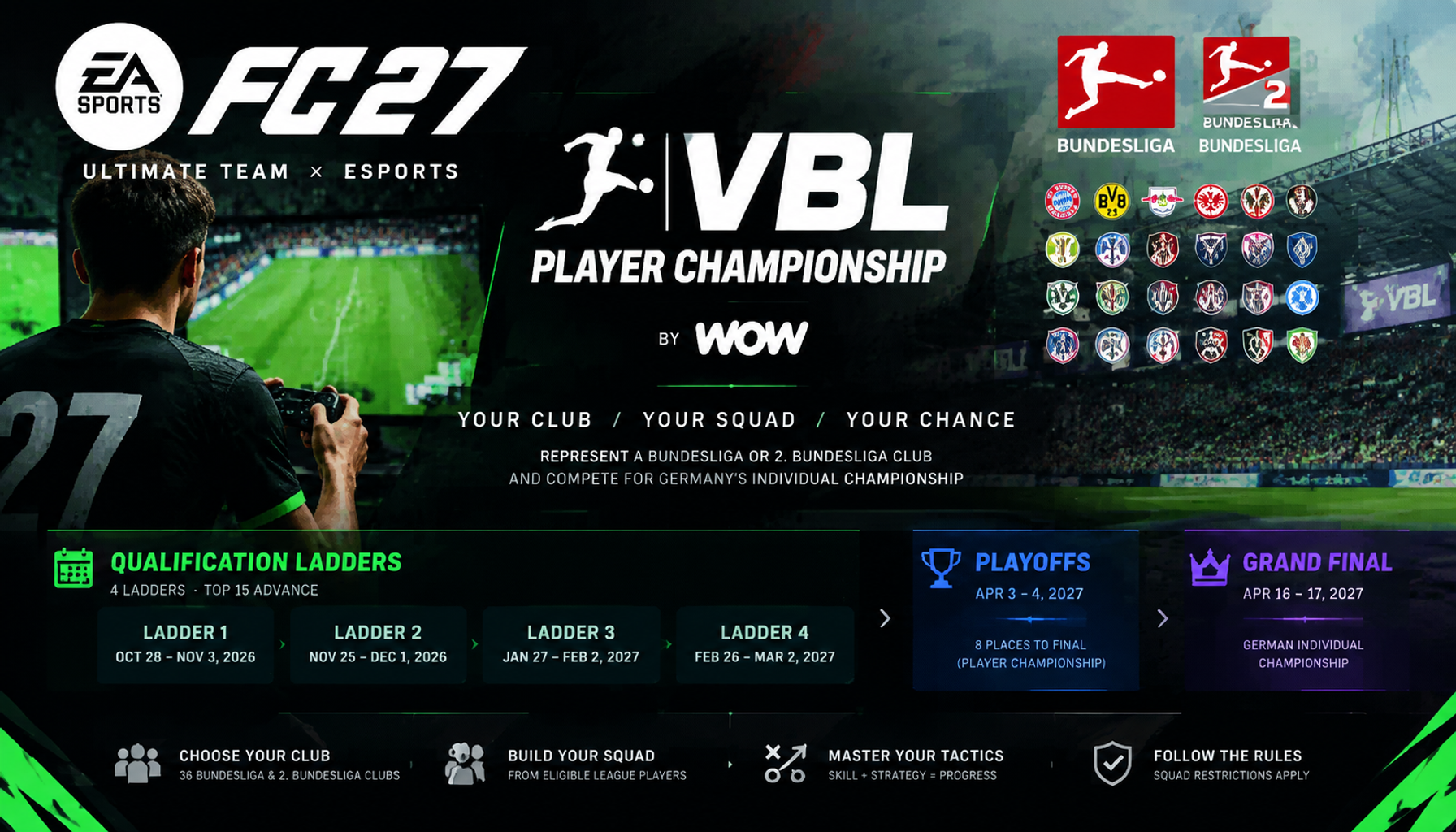
EA SPORTS FC 27 is set to introduce a new in-game competition that connects Ultimate Team with Germany’s individual esports championship. The VBL Player Championship by WOW begins on October 28, giving eligible competitors a chance to represent one of 36 Bundesliga and 2. Bundesliga clubs while building a squad from players in those leagues. The new format brings organised competition into a familiar game mode, but it also places greater emphasis on squad selection, tactical consistency, and compliance with tournament rules. Although FC 27 Coins can help shape team-building decisions in regular Ultimate Team play, the competition’s specific squad restrictions will determine which player items are eligible.
The redesigned championship offers a more direct route from online matches to a national esports event. Four qualification periods will run through early 2027, with the leading competitors advancing towards the playoffs. This structure gives the tournament a defined schedule and creates several opportunities to qualify. Its success, however, will depend on how clearly the rules are communicated and how effectively the competition balances individual skill with the advantages and limitations of personalised squads.
A New Route From Ultimate Team to Esports
The VBL Player Championship replaces the previous VBL Open format with a dedicated competition mode inside EA SPORTS FC 27. Participants will compete in Ultimate Team using squads built from eligible Bundesliga and 2. Bundesliga players, while choosing one of the 36 clubs to represent.
This approach brings the championship closer to the standard Ultimate Team experience. Competitors can work with familiar formations, player roles, and tactical systems instead of learning an entirely separate game mode. At the same time, the tournament’s specific requirements mean that a squad suited to ordinary online matches may not automatically be suitable for competitive play.
Club selection also gives the event a stronger connection to German football. Representing a particular club adds an identity to each campaign, while the individual format ensures that progression depends on personal results rather than a club’s collective esports performance.
The new mode could attract attention from both experienced competitors and ambitious players who have not previously followed the VBL closely. However, access to the in-game mode should not be confused with unrestricted eligibility. The published participation conditions and tournament regulations will determine who can enter and how competitors progress.
How the Qualification System Works
The new championship uses four fixed Ladder periods instead of the previous system that allowed up to 60 matches per qualification month. Understanding the FC 27 VBL Player Championship qualification process is essential, as the top 15 competitors in each Ladder advance to the playoffs, while selected wildcard opportunities provide additional routes into the later stages. This structure gives the competition a clear progression system and allows participants to plan around specific qualification windows.
| Competition stage | Scheduled dates | Qualification objective |
|---|---|---|
| Ladder 1 | October 28–November 3, 2026 | Finish among the top 15 |
| Ladder 2 | November 25–December 1, 2026 | Finish among the top 15 |
| Ladder 3 | January 27–February 2, 2027 | Finish among the top 15 |
| Ladder 4 | February 26–March 2, 2027 | Finish among the top 15 |
| Playoffs | April 3–4, 2027 | Compete for a place in the final |
| Grand final | April 16–17, 2027 | Contest the German individual championship |
The fixed schedule makes the qualification process easier to follow. Each Ladder has a clear opening and closing date, giving competitors a defined period in which to pursue a qualifying position. The format also places greater importance on making effective use of the available matches rather than relying on a long monthly schedule.
The playoffs will bring together Ladder qualifiers and competitors who secure places through designated wildcard routes. Eight places in the 16-player grand final are allocated through the Player Championship playoff pathway, while the remaining eight are reserved for competitors qualifying through the VBL Club Championship.
This arrangement creates two routes to the final stage of the individual championship. It also means that a strong performance in a single Ladder is an important step rather than a guarantee of reaching the final.
Why Squad Building Could Influence the Competition
Using personalised Ultimate Team squads introduces a strategic layer that extends beyond individual player ratings. A high-rated attacker may offer excellent finishing, but the overall lineup still needs suitable midfield support, defensive coverage, and a formation that matches the competitor’s preferred approach.
Several factors could shape squad preparation:
- Formation and player roles: A well-balanced setup can create passing options, protect central areas, and reduce the space available to opposing attackers.
- Tactical consistency: Familiarity with a formation can help maintain defensive shape and make attacking decisions more reliable under pressure.
- League-specific selection: Squad choices must reflect the tournament’s requirements for Bundesliga and 2. Bundesliga player items.
- Adaptability: Competitors may need to adjust their approach when facing opponents who favour different pressing styles, formations, or attacking patterns.
- Rule compliance: The final squad regulations will determine which player items can be selected and what restrictions apply to competitive lineups.
These considerations make preparation more involved than simply assembling the highest-rated players available. A cohesive squad can support a consistent playing style, while unnecessary changes may disrupt defensive coordination or weaken the balance between midfield and attack.
The tournament’s official regulations will be particularly important because the organisers have indicated that squad restrictions will be based on the VBL Club Championship rules and implemented in the game. The precise restrictions should be confirmed through the published competition information rather than inferred from ordinary Ultimate Team requirements.
Competitive Fairness Under a New Format
Moving the championship into Ultimate Team makes the competition more closely connected to the mode many FC players already use. However, personalised squads also raise questions about competitive balance, particularly when participants have access to different player items.
The central issue is how the tournament’s restrictions will work in practice. Squad eligibility, permitted player items, and enforcement of the rules will influence whether competitors face comparable conditions. These details matter because the competition is intended to reward performance in a national championship, not simply success in assembling a powerful team.
It would be premature to conclude that spending more on Ultimate Team automatically creates an advantage in this tournament. The organisers have stated that squad restrictions are intended to establish comparable sporting conditions, but the practical impact will become clearer once the full regulations and in-game implementation are available.
A transparent ruleset would help competitors prepare more effectively and reduce uncertainty over squad selection. It would also make the qualification process easier to understand for newcomers who want to follow the event without already knowing the structure of German esports competitions.
What Competitors Should Prepare Before the First Ladder
The opening qualification period is scheduled to begin on October 28. Before entering, competitors should review the information that directly affects eligibility, squad construction, and progression.
- Check the participation requirements, including applicable age and residency conditions.
- Read the final squad regulations before committing to a particular lineup.
- Confirm the competition schedule and ensure that the qualification period fits the available playing time.
- Practise with a consistent formation and prepare tactical adjustments for different opponents.
- Follow official announcements for updates on wildcard opportunities, playoff rules, and final-stage qualification.
Preparation should focus on repeatable performance rather than constant squad changes. A familiar formation, reliable defensive structure, and clear attacking patterns can make it easier to identify mistakes and adjust between matches. Understanding the rules in advance can also prevent avoidable eligibility problems during a qualification period.
Because the competition is divided into separate Ladders, each period provides a defined opportunity to pursue qualification. The structure rewards planning and consistency while leaving room for competitors to refine their approach between stages.
A More Direct Path to the German Championship
The FC 27 VBL Player Championship brings organised German esports closer to the standard Ultimate Team experience. Its dedicated in-game mode, four qualification periods, and defined route towards the playoffs create a clearer structure for competitors seeking a place in the national individual championship.
The format’s long-term appeal will depend on the clarity of its regulations and the quality of competition it produces. Squad restrictions must be understandable, qualification rules must be applied consistently, and competitors need reliable information about their route to the final. These factors will shape perceptions of fairness more than the introduction of a new mode alone.
As the opening Ladder approaches, the most useful step is to understand the rules and develop a squad that fits the permitted player pool. For ordinary Ultimate Team preparation outside the tournament, some users may also consider whether they need to buy FC 27 Coins to adjust their squads, but coin availability should not be confused with tournament eligibility or a guaranteed competitive advantage. Ultimately, the strongest results will depend on tactical execution, disciplined decision-making, and the ability to perform consistently under pressure.
